Finding the safest sunscreen to use can feel confusing. There are mineral sunscreens, chemical sunscreens, SPF 30, SPF 50, water-resistant formulas, face sunscreens, kid-friendly options, tinted products, and reef-safe choices. Because of this, many shoppers do not know which one is truly best for daily use.
However, the safest sunscreen is not only about one brand name. It should protect your skin from both UVA and UVB rays, feel comfortable, suit your skin type, and be easy to reapply. Moreover, it should use active ingredients that you feel confident using on your body or your family’s skin.
According to the FDA, zinc oxide and titanium dioxide have sufficient safety data to support their use in sunscreen products at concentrations up to 25%. For this reason, many people seeking the safest sunscreen prefer mineral sunscreens containing these ingredients. (U.S. Food and Drug Administration)
In addition, dermatology guidance commonly recommends choosing a broad-spectrum sunscreen with SPF 30 or higher. Mayo Clinic also notes that shoppers should look for broad-spectrum protection, SPF 30 or higher, and water- or sweat-resistant protection when needed. (Mayo Clinic Press)
In this guide, you will learn what makes sunscreen safer, which ingredients to look for, which ingredients many people prefer to avoid, and which Amazon-friendly sunscreen options may work best for different needs. You will also find buying tips, skin-type guidance, application advice, and FAQs.
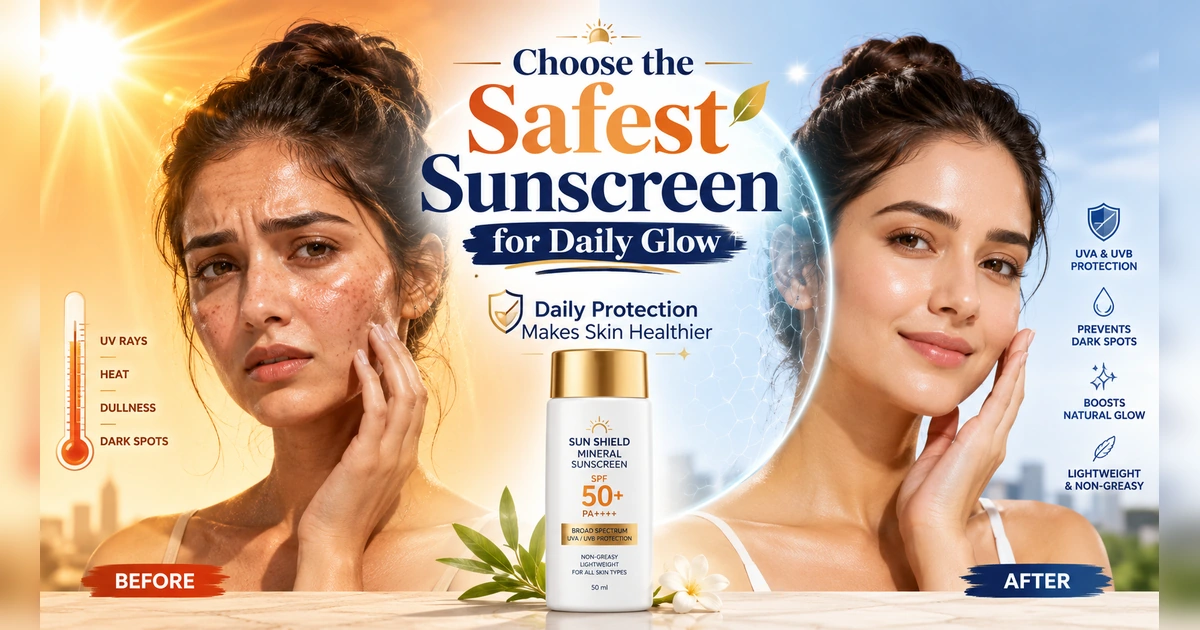
What Does “Safest Sunscreen to Use” Really Mean?
The safest sunscreen to use is one that provides reliable sun protection and is suitable for your skin and lifestyle. In most cases, this means the sunscreen should be broad-spectrum, SPF 30 or higher, easy to apply, and comfortable enough for daily use.
A safe sunscreen should help protect against sunburn, early skin ageing, and UV-related skin damage. However, sunscreen should not be your only protection. Hats, sunglasses, shade, and UPF clothing are also important.
Generally, a safer sunscreen should have:
- Broad-spectrum protection
- SPF 30 or higher
- Zinc oxide or titanium dioxide for mineral users
- Water resistance for swimming or sweating
- Fragrance-free option for sensitive skin
- Non-comedogenic formula for acne-prone skin
- Clear expiry date
- Trusted seller or official brand listing
- Easy texture for regular reapplication
Although many people search for one “perfect” sunscreen, the best choice depends on your skin type. For example, a thick mineral sunscreen may be great for outdoor sports but too heavy for oily facial skin. On the other hand, a lightweight face sunscreen may feel great for daily use but may not be strong enough for swimming or hiking.
Therefore, the safest sunscreen is the one that matches your needs and is used correctly.
Mineral vs Chemical Sunscreen: Which Feels Safer?
Sunscreens usually fall into two main groups: mineral and chemical. Both types can protect your skin when used correctly. However, people who want the safest sunscreen often prefer mineral sunscreens because their ingredient lists are easier to understand.
Mineral Sunscreen
Mineral sunscreen uses zinc oxide, titanium dioxide, or both. These ingredients sit on the skin’s surface and help block or scatter UV rays. Moreover, mineral sunscreen is often recommended for sensitive skin and children.
Many mineral sunscreens are also reef-conscious. Because of this, they are popular among people who want a cleaner or more environmentally friendly option.
Still, mineral sunscreen can have drawbacks. It may feel thicker, leave a white cast, or take more time to blend. Fortunately, modern formulas now include sheer, tinted, lightweight, and face-friendly versions.
Chemical Sunscreen
Chemical sunscreens use ingredients such as avobenzone, octisalate, octocrylene, homosalate, and other UV filters. These formulas often feel lighter and blend more easily into the skin.
However, the FDA has requested additional safety data on several sunscreen ingredients commonly used in the United States. Meanwhile, zinc oxide and titanium dioxide are the two ingredients with sufficient safety data to be granted GRASE status under FDA review. (U.S. Food and Drug Administration)
For this reason, people who want a more cautious choice often choose mineral sunscreen. Still, chemical sunscreen may be suitable for some users, especially if it helps them apply sunscreen consistently.
Ingredients to Look for in the Safest Sunscreen
When choosing the safest sunscreen, start with the active ingredients. This section tells you what actually protects your skin from UV rays.
Zinc Oxide
Zinc oxide is one of the most trusted sunscreen ingredients for people who prefer mineral formulas. It offers broad-spectrum protection and is commonly used in sunscreens for sensitive skin, babies, and outdoor activities.
Moreover, zinc oxide is often preferred because it protects against both UVA and UVB rays. Therefore, it is a strong choice for daily use, beach trips, hiking, and family sun protection.
Titanium Dioxide
Titanium dioxide is another UV filter mineral. It is often used in face sunscreens because it can feel lighter than zinc oxide in some formulas. However, many high-quality sunscreens combine titanium dioxide with zinc oxide for better overall protection.
Broad Spectrum Label
The active ingredient is important, but the label also matters. Broad spectrum means the sunscreen helps protect against both UVA and UVB rays. Since both types of UV rays can damage your skin, this label is essential.
SPF 30 or Higher
SPF 30 is a good minimum for most people. Mayo Clinic notes that SPF 30 blocks about 97% of UVB rays, while SPF 100 only blocks slightly more. However, sunscreen still needs to be reapplied because its protection usually lasts only about 2 hours. (Mayo Clinic Health System)
Because of this, SPF 30 to SPF 50 is often a practical range for daily use and outdoor activities.
Ingredients Many Shoppers Prefer to Avoid
Some shoppers prefer to avoid certain sunscreen ingredients because of skin sensitivity, environmental concerns, or ongoing safety questions. However, this does not mean every ingredient is dangerous for every person.
If you want a cautious sunscreen choice, consider avoiding:
- Oxybenzone
- Octinoxate
- Strong artificial fragrance
- Aerosol sprays
- PABA
- Glitter or microplastic-style particles
- Expired or separated sunscreen
- Products without clear SPF and broad-spectrum labelling
EWG recommends mineral-based sunscreens with zinc oxide for balanced UV protection and cautions against sprays due to inconsistent coverage and potential inhalation concerns. A recent report also noted that EWG reviewed thousands of SPF products and found only a small subset that met its stricter safety and effectiveness criteria. (The Sun)
In addition, fragrance-free formulas may be better for sensitive skin. If your skin burns, stings, or breaks out easily, a simple mineral sunscreen may be a safer starting point.
How to Choose the Safest Sunscreen to Use
Choosing the safest sunscreen becomes easier when you follow a simple checklist. Instead of buying only by brand name, compare protection levels, ingredients, texture, skin type compatibility, and real customer reviews.
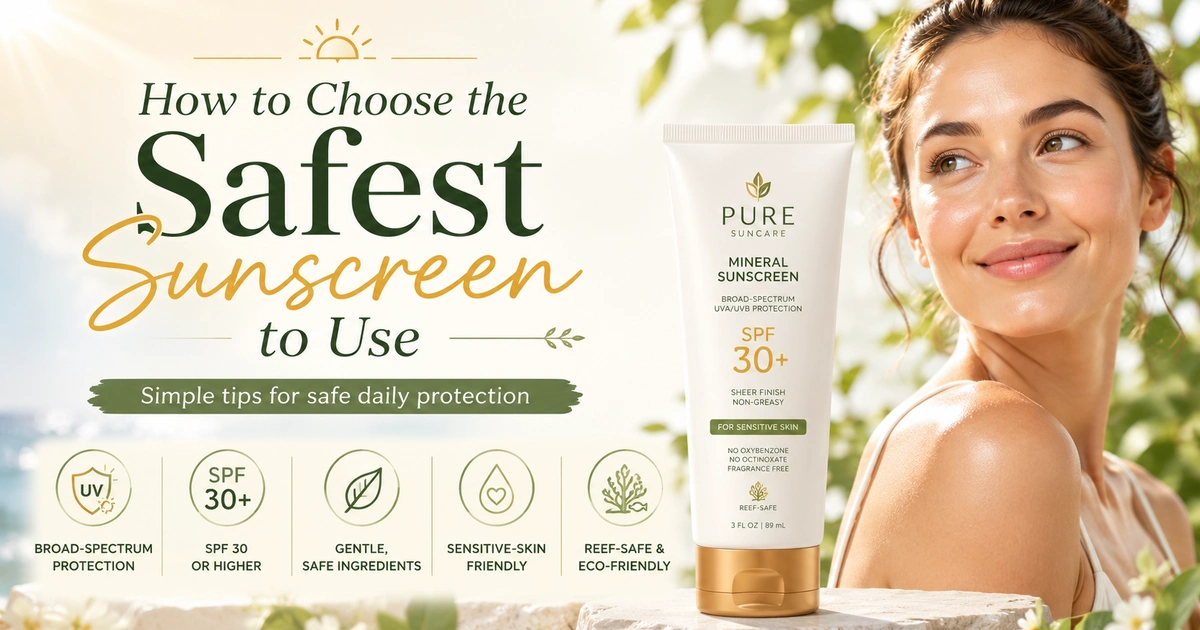
1. Start with Broad-Spectrum Protection
Broad-spectrum sunscreen protects against both UVA and UVB rays. UVB rays are mainly linked with sunburn. Meanwhile, UVA rays can contribute to early ageing and deeper skin damage.
Because both types of rays pose a risk, broad-spectrum protection should be your priority.
2. Choose SPF 30 or Higher
SPF 30 is a good everyday minimum. However, SPF 40 or SPF 50 may be better for long outdoor days, beach trips, hiking, sports, gardening, or travel.
Still, higher SPF does not mean all-day protection. Therefore, reapplication is necessary.
3. Consider Mineral Active Ingredients
If you want a cautious option, look for zinc oxide or titanium dioxide. People with sensitive skin often prefer these mineral filters, parents buying sunscreen for children, and eco-conscious shoppers.
Moreover, mineral sunscreen is often easier to evaluate because the active ingredient list is simpler.
4. Pick Water Resistance for Outdoor Use
Water-resistant sunscreen is helpful if you swim, sweat, exercise, or spend time outside. However, water-resistant does not mean waterproof.
For active days, look for 40-minute or 80-minute water resistance. After swimming, sweating, or towel-drying, reapply sunscreen.
5. Avoid Heavy Fragrance if Your Skin Is Sensitive
Fragrance can make sunscreen smell nice. However, it may irritate sensitive skin. Because of this, fragrance-free sunscreen is usually a better choice for babies, kids, and people with sensitive skin.
6. Check Texture and White Cast
Mineral sunscreen can sometimes leave a white cast. Therefore, people with medium, tan, or deeper skin tones may prefer tinted mineral sunscreen.
A lightweight formula may also be better for oily skin. On the other hand, dry skin may feel more comfortable with a moisturising sunscreen.
7. Read Recent Amazon Reviews
Amazon reviews can help you understand how a sunscreen performs in real life. However, star ratings alone are not enough.
Instead, read comments about texture, smell, white cast, breakouts, eye stinging, water resistance, and packaging. Also, check recent reviews because formulas and packaging can change over time.
Best Safest Sunscreen to Use: Amazon Affiliate Picks
Below are Amazon-friendly sunscreen options and product categories for your affiliate article. Before publishing, check the latest product listing, ingredients, price, and availability because formulas may change.
1. Best Overall Safest Sunscreen to Use: Blue Lizard Sensitive Mineral Sunscreen
Best for: Sensitive skin, family use, daily body protection
Type: Mineral sunscreen
Main benefit: Gentle broad-spectrum protection
Blue Lizard Sensitive Mineral Sunscreen is a strong option for those seeking a gentle, reliable sunscreen. Sensitive-skin users often choose it because it focuses on mineral protection and fragrance-free options.
Moreover, this sunscreen can work well for adults, teens, and families. Since sensitive skin may react to fragrance or harsh additives, a simple mineral formula can be a smart choice.
However, like many mineral sunscreens, it may leave some white cast. For better results, apply it in small sections and blend slowly.
Pros
- Good for sensitive skin
- Mineral-based formula
- Broad-spectrum protection
- Fragrance-free options available
- Family-friendly choice
Cons
- White cast may appear
- Texture may feel thick
- Not always ideal for oily facial skin
Best For
This sunscreen is best for people who want a safe-feeling mineral sunscreen for sensitive skin and family use.
CTA: Check the latest price on Amazon.
2. Best High SPF Mineral Sunscreen: Thinksport Mineral Sunscreen SPF 50+
Best for: Sports, beach days, travel, outdoor work
Type: Mineral sunscreen
Main benefit: Strong SPF protection
Thinksport Mineral Sunscreen SPF 50+ is a popular choice for people who spend long hours outdoors. It offers high SPF protection and is commonly used for sports, travel, hiking, and beach activities.
In addition, this sunscreen is often preferred by those seeking a mineral formula without oxybenzone or octinoxate. Because of its higher SPF level, it can be useful on active days when sun exposure is longer.
On the other hand, it may feel heavier than a daily face sunscreen. Therefore, many users may prefer it for the body and use a lighter product on the face.
Pros
- SPF 50+ protection
- Mineral active ingredient
- Good for outdoor use
- Useful for sports and beach trips
- Family-friendly option
Cons
- May feel heavy on oily skin
- White cast is possible
- Not always best under makeup
Best For
This sunscreen is best for people who need stronger sun protection for outdoor activities.
CTA: Check the latest price on Amazon.
3. Best Simple Mineral Sunscreen: Badger Mineral Sunscreen SPF 40
Best for: Simple ingredients, outdoor activities, eco-conscious users
Type: Mineral sunscreen
Main benefit: Simple zinc oxide formula
Badger Mineral Sunscreen SPF 40 is a good option for people who prefer simple ingredient lists. Many of its sunscreen formulas focus on mineral protection and outdoor durability.
Moreover, it is useful for beach trips, hiking, camping, kayaking, and family travel. If you want a sunscreen that feels straightforward and dependable, this can be a strong option.
However, Badger sunscreen may feel thicker than chemical sunscreen. Because of this, it needs careful blending. Still, many users like it because it offers a simple, practical mineral sunscreen experience.
Pros
- Mineral-based protection
- Simple formula approach
- Good for outdoor activities
- Reef-conscious option
- Water-resistant versions available
Cons
- Can feel thick
- White cast may happen
- Needs proper blending
Best For
This sunscreen is best for people who want a simple mineral sunscreen with fewer unnecessary ingredients.
CTA: Check the latest price on Amazon.
4. Best Daily Face Sunscreen: Babo Botanicals Daily Sheer Mineral Sunscreen
Best for: Face, daily routine, sensitive skin
Type: Mineral sunscreen
Main benefit: Gentle daily face use
Babo Botanicals Daily Sheer Mineral Sunscreen is a good option for people who want a safe-feeling sunscreen for daily face use. Since facial skin can be more sensitive than body skin, a comfortable formula is important.
Moreover, this sunscreen can fit into a morning skincare routine. It may work before makeup, during daily errands, while driving, or when working near windows.
However, some mineral face sunscreens can leave a slight cast. Therefore, check reviews from people with a similar skin tone before buying.
Pros
- Good for daily face use
- Mineral formula
- Gentle texture
- Suitable for sensitive skin
- Easy to use in a skincare routine
Cons
- May not suit very oily skin
- A smaller tube may cost more
- White cast may appear
Best For
This sunscreen is best for people who want a mineral sunscreen for daily face protection.
CTA: Check the latest price on Amazon.
5. Best Sunscreen for Kids: Babyganics Mineral Sunscreen
Best for: Children, family outings, parks, beach days
Type: Mineral sunscreen
Main benefit: Kid-friendly use
Babyganics Mineral Sunscreen is a popular choice for parents looking for a sunscreen for children. Kids often run, sweat, swim, and play outside. Therefore, an easy-to-apply, reapply sunscreen is important.
In addition, mineral formulas are often preferred by parents because they feel simple and gentle. However, sunscreen should not be the only protection for children. Hats, shade, sunglasses, and protective clothing are also necessary.
Moreover, reapplication matters a lot. After swimming or towel-drying, reapply sunscreen.
Pros
- Kid-friendly formula
- Mineral sunscreen
- Good for family use
- Useful for outdoor play
- Often available in lotion or stick format
Cons
- Needs frequent reapplication
- May feel thick
- White cast can happen
Best For
This sunscreen is best for parents who need a mineral sunscreen for kids and family activities.
CTA: Check the latest price on Amazon.
6. Best Sunscreen Stick: Mineral Sunscreen Stick
Best for: Face, nose, ears, kids, travel
Type: Stick sunscreen
Main benefit: Mess-free touch-ups
A mineral sunscreen stick is very useful for quick application. It works well on the nose, cheeks, ears, hairline, and shoulders. Moreover, it is easy to carry in a purse, backpack, school bag, or travel pouch.
However, sunscreen sticks are not ideal for full-body use. They take longer to apply over large areas. Therefore, use them mainly for small areas and reapplication.
In addition, apply enough product. Many people use too little sunscreen, which reduces protection. Swipe several times over the same area and blend gently.
Pros
- Easy to carry
- Mess-free application
- Good for kids
- Great for face touch-ups
- Travel-friendly
Cons
- Not ideal for the full body
- Can feel waxy
- Easy to under-apply
Best For
This sunscreen is best for quick reapplication and sensitive areas like the ears, nose, and face.
CTA: Check the latest price on Amazon.
7. Best Tinted Mineral Sunscreen: Tinted Zinc Oxide Face Sunscreen
Best for: Medium to deeper skin tones, face use, white cast concern
Type: Tinted mineral sunscreen
Main benefit: Better blending
Tinted mineral sunscreen is a smart option for people who dislike white cast. Since zinc oxide can look pale on the skin, tint can help the formula blend more naturally.
Moreover, tinted sunscreen can be useful for daily face use. Some people use it instead of light makeup because it can even out the skin’s tone while providing sun protection.
However, tint shades may not match every skin tone. Therefore, read reviews and check product photos before buying.
Pros
- Helps reduce white cast
- Good for facial use
- Mineral protection
- Can replace light base makeup
- Useful for daily routines
Cons
- Tint may not match everyone
- Can be transferred onto clothing
- A smaller size may cost more
Best For
This sunscreen is best for people who want mineral protection without a strong white cast.
CTA: Check the latest price on Amazon.
Safest Sunscreen by Skin Type
Different skin types need different sunscreen formulas. Therefore, choosing by skin type can help you avoid irritation, breakouts, or discomfort.
For Sensitive Skin
Fragrance-free mineral sunscreen is usually a good starting point. Zinc oxide formulas may feel gentler for many sensitive-skin users.
A patch test is also helpful. Apply a small amount on one area first and wait to see how your skin reacts.
For Oily Skin
A lightweight, non-greasy sunscreen may feel better on oily skin. Gel-cream, sheer mineral, or matte-finish face sunscreen can be useful.
However, thick balms may feel greasy when used daily on the face. For this reason, reserve heavier formulas for outdoor use on the body.
For Dry Skin
Moisturising sunscreen can feel more comfortable on dry skin. Ingredients like glycerin, aloe, shea butter, or plant oils may help reduce tightness.
Still, very dry skin may need moisturiser before sunscreen. As a result, the sunscreen can spread more smoothly.
For Acne-Prone Skin
Non-comedogenic sunscreen is a better choice for acne-prone skin. This means the formula is designed not to clog pores.
However, every skin is different. If one sunscreen causes breakouts, try a lighter formula or a different texture.
For Darker Skin Tones
Tinted mineral sunscreen may blend better on deeper skin tones. Otherwise, regular mineral sunscreen can leave a visible white cast.
Before buying, check reviews from people with similar skin tones. Customer photos can be especially helpful.
For Kids
Mineral sunscreen lotions and sticks are often practical for children. Also, hats, shade, sunglasses, and protective clothing are important.
Since kids sweat and swim often, reapply sunscreen regularly.
How to Apply Sunscreen Safely and Correctly
Even the safest sunscreen won’t work well if you apply too little. Therefore, correct application is very important.
Follow these simple steps:
- Apply sunscreen 15 minutes before sun exposure.
- Use enough product to cover all exposed skin.
- Reapply every 2 hours.
- Reapply after swimming, sweating, or towel drying.
- Cover ears, neck, hands, feet, shoulders, and hairline.
- Use SPF lip balm.
- Wear hats, sunglasses, and protective clothing.
Moreover, do not depend only on sunscreen during strong sunlight. Shade, UPF clothing, and hats give extra protection.
Many people make sunscreen mistakes without realising it. Common errors include applying too little, not reapplying, skipping cloudy days, using expired products, missing ears and lips, and relying only on makeup with SPF. Recent dermatologist commentary also stresses that sunscreen should be used daily along with other sun-protection habits. (Cosmopolitan)
Common Sunscreen Mistakes to Avoid
Buying a good sunscreen is only the first step. However, using it correctly is what actually protects your skin.
Avoid these common mistakes:
- Applying too little sunscreen
- Forgetting to reapply
- Missing ears, neck, feet, and hands
- Using expired sunscreen
- Trusting only high SPF numbers
- Skipping sunscreen on cloudy days
- Relying only on makeup with SPF
- Using spray sunscreen in windy areas
- Not checking the active ingredients
- Choosing a sunscreen that irritates your skin
Cloudy weather can still expose your skin to UV rays. Therefore, sunscreen is useful even when the sky is not bright.
Also, do not use sunscreen that smells strange, separates, or has expired. An old sunscreen may not protect your skin properly.
Amazon Buying Tips for the Safest Sunscreen
Amazon has many sunscreen options. However, not every listing is equally reliable. Therefore, check product details carefully before buying.
Before adding sunscreen to your cart, review these points:
- Active ingredients
- SPF level
- Broad-spectrum label
- Water resistance
- Fragrance-free or scented formula
- Lotion, stick, balm, or spray format
- White cast reviews
- Skin type reviews
- Expiry date details
- Seller reliability
- Recent customer feedback
In addition, read both positive and negative reviews. Positive reviews show what people like. Meanwhile, negative reviews reveal possible issues such as stinging eyes, white cast, greasiness, breakouts, strong smell, or poor blending.
Also, try to buy from the official brand store or a trusted seller. This can help reduce the risk of receiving old or poorly stored products.
Sunscreen Safety for Babies and Children
For children, sunscreen choice matters. However, physical protection is just as important.
For babies under 6 months, many health organisations recommend avoiding direct sun exposure and using protective clothing, shade, and hats instead of relying heavily on sunscreen. For older babies and children, mineral sunscreen is often preferred by parents because it feels simple and gentle.
When choosing sunscreen for kids, look for:
- Mineral active ingredients
- SPF 30 or higher
- Broad-spectrum protection
- Fragrance-free formula
- Water resistance
- Easy application
- Gentle texture
In addition, use rash guards, hats, sunglasses, and shade whenever possible. Since kids move a lot, reapply sunscreen often.
Is Higher SPF Always Safer?
Higher SPF can sound safer, but it isn’t always a significant upgrade. SPF 30 already blocks about 97% of UVB rays, while very high SPF products may only provide a small additional level of UVB protection. Mayo Clinic also notes that SPF does not determine how long you are protected, and protection usually lasts two hours or less. (Mayo Clinic Health System)
Therefore, SPF 30 to SPF 50 is a practical range for most people. More importantly, apply enough sunscreen and reapply regularly.
A high-SPF sunscreen used badly is not safer than an SPF 30 sunscreen used correctly.
Is Spray Sunscreen Safe to Use?
Spray sunscreen is popular because it feels convenient. However, it has some drawbacks.
First, it can be inhaled during application. In addition, spray sunscreen may not cover the skin evenly. Wind can also blow the product away before it reaches your skin.
For this reason, many cautious shoppers prefer lotion, cream, balm, or stick sunscreen. If you use spray sunscreen, apply it carefully in a well-ventilated area and avoid spraying near the face.
Final Verdict: What Is the Safest Sunscreen to Use?
The safest sunscreen to use depends on your skin type, age, lifestyle, and personal comfort. However, for many people, a mineral sunscreen with zinc oxide or titanium dioxide, SPF 30 or higher, broad-spectrum protection, and water resistance is a smart choice.
If you have sensitive skin, a fragrance-free mineral sunscreen like Blue Lizard Sensitive may be a good option. For long outdoor exposure, Thinksport SPF 50+ can work well. People who prefer simple ingredients may like Badger. For daily face use, Babo Botanicals or a tinted mineral sunscreen can be useful.
Finally, remember that sunscreen only works when you use it correctly. Therefore, apply enough, reapply often, avoid expired products, and combine sunscreen with shade, hats, sunglasses, and protective clothing.
The safest sunscreen is not just the one with the best label. It is the one that protects well, suits your skin, and becomes part of your daily routine.
FAQs About the Safest Sunscreen to Use
1. What is the safest sunscreen to use?
The safest sunscreen to use is usually broad-spectrum, SPF 30 or higher, and suitable for your skin type. Many cautious shoppers prefer mineral sunscreen with zinc oxide or titanium dioxide.
2. Is mineral sunscreen safer than chemical sunscreen?
Mineral sunscreen is often preferred by people who want a cautious option because zinc oxide and titanium dioxide have strong safety data under FDA review. However, the best sunscreen is the one you can use correctly and consistently.
3. What sunscreen ingredients should I look for?
Zinc oxide and titanium dioxide are common mineral sunscreen ingredients. In addition, look for broad-spectrum protection and SPF 30 or higher.
4. What sunscreen ingredients should I avoid?
Some shoppers prefer to avoid oxybenzone, octinoxate, strong artificial fragrance, aerosol sprays, PABA, and products without clear broad-spectrum labelling.
5. Is SPF 100 safer than SPF 30?
Not always. SPF 30 blocks about 97% of UVB rays, while a very high SPF adds only a small amount more. Proper application and reapplication are more important.
6. Is sunscreen safe for daily use?
Yes, sunscreen is commonly recommended for daily sun protection. Moreover, daily use helps protect against sunburn, early ageing, and UV-related skin damage.
7. What sunscreen is best for sensitive skin?
A fragrance-free mineral sunscreen with zinc oxide is usually a good starting point for sensitive skin. However, patch testing is helpful before full use.
8. What is the safest sunscreen for kids?
Many parents prefer mineral sunscreen with zinc oxide or titanium dioxide for kids. In addition, children should wear hats, use shade, wear sunglasses, and wear protective clothing.
9. Is spray sunscreen safe?
Spray sunscreen can be convenient, but it may be inhaled and may be applied unevenly. Therefore, lotion, cream, stick, or balm sunscreen is often a better cautious choice.
10. Where can I buy the safest sunscreen?
You can buy safe sunscreen options on Amazon, brand websites, pharmacies, beauty stores, and outdoor shops. However, always check the active ingredients, SPF, broad-spectrum labelling, reviews, seller details, and expiry information before buying.