Effaclar Serum has become a popular choice for people struggling with acne, clogged pores, and post-acne marks. Acne can be stressful, especially when it keeps coming back. Sometimes your skin looks oily in the morning, but by the afternoon, small bumps, whiteheads, or congestion start to appear. Because of this, many people look for a serum that can help improve breakouts, rough texture, and acne-related concerns.
One popular product in this category is La Roche-Posay Effaclar Serum. More specifically, many shoppers search for the La Roche-Posay Effaclar Salicylic Acid Acne Treatment Serum because it is made for acne-prone skin. Moreover, it is designed to help clear acne blemishes, prevent new breakouts, and improve the look of pores, fine lines, and post-acne marks. The official product page says the formula contains a Triple Acid Complex with 1.5% salicylic acid, glycolic acid, and lipo-hydroxy acid, along with niacinamide and La Roche-Posay Thermal Spring Water.
However, before buying any acne serum from Amazon, it is important to understand how it works. Acne treatments can help improve the skin, but they may also cause dryness or irritation if used too often.
In this complete Effaclar Serum review, you will learn what it is, who it is best for, how to use it, what ingredients it contains, and whether it is worth buying.
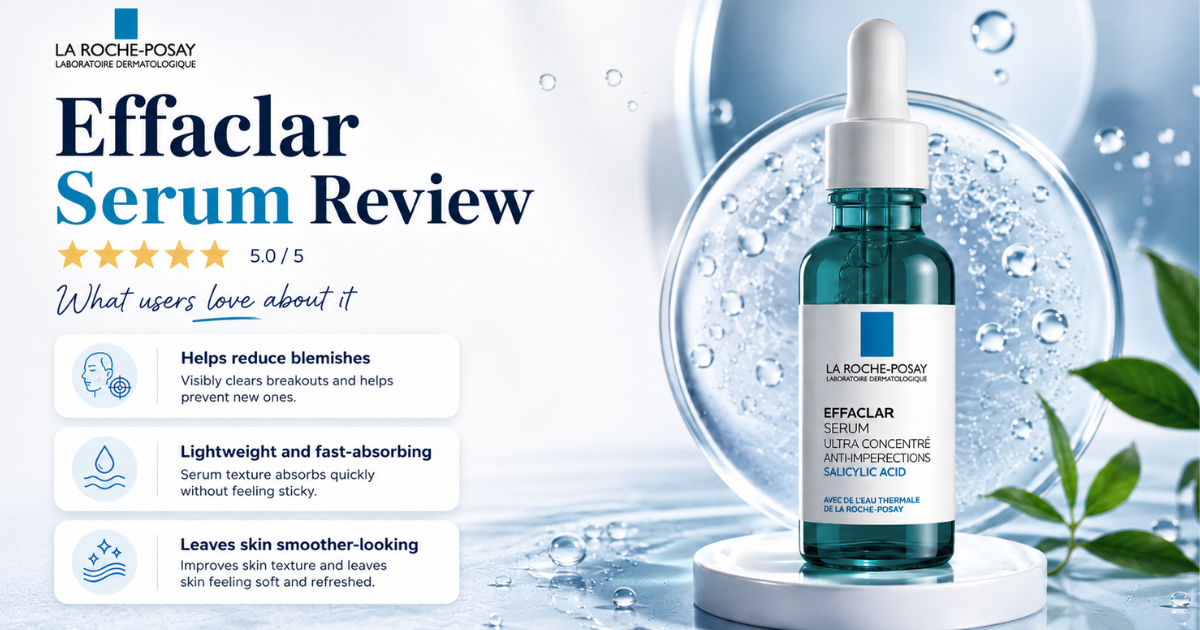
What Is Effaclar Serum?
Effaclar Serum is an acne treatment serum from La Roche-Posay. It is mainly made for acne-prone skin, clogged pores, whiteheads, blackheads, uneven skin tone, and post-acne marks.
Unlike a basic moisturiser, this serum contains active exfoliating ingredients. Therefore, it does more than hydrate the skin. It helps exfoliate dead skin cells, clear clogged pores, and improve the look of rough texture.
In addition, Effaclar Serum has a lightweight texture. Because of this, it can fit easily into a morning or night skincare routine.
However, it is not a simple hydrating serum. Since it contains exfoliating acids, it should be used carefully. If you use too much, your skin may become dry, red, or irritated.
Check Price on Amazon: [Insert Amazon Affiliate Link]
Quick Product Overview
| Feature | Details |
|---|---|
| Product Name | La Roche-Posay Effaclar Salicylic Acid Acne Treatment Serum |
| Short Name | Effaclar Serum |
| Best For | Acne-prone skin, clogged pores, blackheads, whiteheads |
| Main Active Ingredient | 1.5% Salicylic Acid |
| Other Key Ingredients | Glycolic Acid, LHA, Niacinamide, Thermal Spring Water |
| Texture | Lightweight serum |
| Use Time | Morning or evening |
| Sunscreen Needed | Yes |
| Good for Beginners? | Yes, but start slowly. |
| Amazon Link | [Insert Affiliate Link] |
Why Is Effaclar Serum Popular?
Effaclar Serum is popular because it targets several common acne-related concerns at the same time. For example, many acne products only focus on active pimples. However, this serum also focuses on clogged pores, texture, visible pores, and post-acne marks.
Moreover, La Roche-Posay is a well-known skincare brand, especially for acne-prone and sensitive skin routines. Because of this, many people feel more comfortable trying Effaclar Serum compared with unknown acne products.
In addition, the formula includes salicylic acid. The American Academy of Dermatology explains that salicylic acid has been used for years to treat acne because it helps open clogged pores and exfoliate the skin. It is also used for whiteheads and pimples. (American Academy of Dermatology)
Therefore, if your main concerns are clogged pores, acne blemishes, blackheads, and uneven skin texture, Effaclar Serum may be worth considering.
Key Ingredients in Effaclar Serum
The ingredients are the most important part of this review. So, let’s break them down into simple words.
1. Salicylic Acid
Salicylic acid is the main active ingredient in Effaclar Serum. The official product page lists 1.5% salicylic acid as the active ingredient. (La Roche-Posay)
Salicylic acid is a beta-hydroxy acid, also known as BHA. It is commonly used in acne products because it can help unclog pores. Moreover, it can exfoliate dead skin cells that may block pores and lead to breakouts.
Because salicylic acid is often used for whiteheads, pimples, and clogged pores, it is a good match for acne-prone skin. However, it can cause dryness or irritation in some people. Therefore, you should start slowly.
2. Glycolic Acid
Glycolic acid is an alpha-hydroxy acid, also known as AHA. It helps exfoliate the surface of the skin. As a result, the skin may look smoother and brighter over time.
In Effaclar Serum, glycolic acid works with salicylic acid and LHA. Together, they help improve the look of uneven texture and post-acne marks.
However, glycolic acid may increase sun sensitivity. Because of this, sunscreen is very important when using this serum. The official page also includes a sunburn warning and recommends sunscreen, protective clothing, and limited sun exposure while using the product and for a week afterwards. (La Roche-Posay)
3. Lipo-Hydroxy Acid
Lipo-hydroxy acid, also called LHA, is a derivative of salicylic acid. It has exfoliating and skin-renewing properties. In simple words, it helps remove dead skin cells from the surface of the skin.
Moreover, LHA can help refine the look of pores and improve skin texture. Because of this, it supports the serum’s acne and texture benefits.
4. Niacinamide
Niacinamide is a form of vitamin B3. It is often used in skincare because it can help improve the look of uneven tone and support the skin barrier.
In this serum, niacinamide helps balance the exfoliating formula. Moreover, it may help reduce the appearance of post-acne discolouration. The official product page also says niacinamide is known for helping visibly fade skin discolouration. (La Roche-Posay)
5. La Roche-Posay Thermal Spring Water
La Roche-Posay Thermal Spring Water is included to help soothe the skin. This is helpful because acne treatments can sometimes feel strong or drying.
However, soothing ingredients do not mean the product is irritation-free for everyone. Therefore, people with very sensitive skin should patch test first.
How Does Effaclar Serum Work?
Effaclar Serum works mainly by exfoliating the skin and helping clear clogged pores. Acne often happens when oil, dead skin cells, and bacteria become trapped inside pores. As a result, pimples, blackheads, and whiteheads can appear.
Salicylic acid helps unclog pores. Meanwhile, glycolic acid works on the skin surface. In addition, LHA supports gentle exfoliation and skin renewal. Because of this combination, the serum targets acne blemishes, rough texture, and visible pore concerns.
Moreover, the Mayo Clinic notes that salicylic acid may help unclog pores and prevent new breakouts, while glycolic acid can remove dead skin cells and improve the look of acne scars and pores. (Mayo Clinic)
However, results take time. You should not expect clear skin overnight. Instead, consistent use with a gentle routine is the key.
Benefits of Effaclar Serum
1. Helps Clear Acne Blemishes
The main benefit of Effaclar Serum is acne support. Since it contains 1.5% salicylic acid, it may help reduce acne blemishes and clogged pores.
However, it is better for mild to moderate acne concerns. If you have severe cystic acne, painful nodules, or acne that leaves deep scars, you should speak with a dermatologist.
2. Helps Prevent New Breakouts
Because salicylic acid helps keep pores clearer, it may also help prevent future breakouts. This is useful if your acne returns again and again in the same areas.
However, acne can have many causes. Hormones, stress, makeup, diet, and skin habits may all play a role. Therefore, one serum may not fix every acne problem.
3. Helps With Blackheads and Whiteheads
Blackheads and whiteheads usually happen when pores become clogged. Since Effaclar Serum contains salicylic acid, it can be helpful for these concerns.
Moreover, regular exfoliation may make the skin look cleaner and smoother over time.
4. Improves Skin Texture
A rough texture can make the skin look dull. Fortunately, the combination of glycolic acid, salicylic acid, and LHA can help exfoliate dead skin cells.
As a result, the skin may feel smoother with consistent use.
5. Reduces the Look of Pores
Pores cannot disappear permanently. However, they can look larger when they are filled with oil and dead skin.
Because Effaclar Serum helps clear clogged pores, pores may look less noticeable over time.
6. Helps With Post-Acne Marks
Post-acne marks are the dark or red-looking marks left after pimples heal. Effaclar Serum may help improve the look of these marks because it contains exfoliating acids and niacinamide.
However, sunscreen is very important. Without sunscreen, post-acne marks may look darker and take longer to fade.
Who Should Use Effaclar Serum?
Effaclar Serum may be a good option for people with:
- Acne-prone skin
- Oily skin
- Clogged pores
- Blackheads
- Whiteheads
- Red, raised pimples
- Enlarged-looking pores
- Uneven skin texture
- Post-acne marks
- Adult acne concerns
Moreover, it may be useful for people who want one serum that targets acne and texture together.
However, it is not ideal for everyone.
Who Should Be Careful With Effaclar Serum?
You should use Effaclar Serum carefully if you have:
- Very sensitive skin
- Peeling skin
- Damaged skin barrier
- Active eczema
- Fresh sunburn
- Recently waxed skin
- Recent chemical peel
- Recent laser treatment
- A strong retinol routine
- Allergy to salicylic acid
The official directions say not to use this serum on peeling or compromised skin and to avoid the eye contour and eye contact. (La Roche-Posay)
In addition, Mayo Clinic notes that salicylic acid products may cause mild stinging, skin discolouration, and minor skin irritation. (Mayo Clinic)
Therefore, if your skin reacts easily, start slowly and patch test before using it on your full face.
How to Use Effaclar Serum
Using Effaclar Serum correctly is very important. If you use it the wrong way, your skin may become irritated. Therefore, follow a simple routine.
Morning Routine
- Wash your face with a gentle cleanser.
- Apply a thin layer of Effaclar Serum to affected areas.
- Apply a lightweight moisturiser.
- Finish with broad-spectrum sunscreen.
This routine is good if your skin tolerates acids well. However, if you are a beginner, night use may be easier.
Night Routine
- Cleanse your face.
- Apply a thin layer of Effaclar Serum.
- Follow with moisturiser.
This routine is simple and beginner-friendly. Moreover, it reduces the chance of layering too many active ingredients in the morning.
How Often Should You Use It?
The official directions say to start with one application daily, then gradually increase to two or three times daily if needed. The brand also says to apply a thin layer after cleansing and not rinse it off. (La Roche-Posay)
However, many beginners should start more slowly, especially if they have sensitive or dry skin.
A gentle beginner schedule can be:
- Week 1: Use 2 nights per week
- Week 2: Use every other night
- Week 3: Use once daily if tolerated
- After that: Increase only if needed
If your skin becomes dry, red, itchy, or flaky, reduce use immediately.
What to Use With Effaclar Serum
Because Effaclar Serum contains active acids, your other products should be gentle.
Good products to pair with it include:
- Gentle cleanser
- Lightweight moisturiser
- Non-comedogenic sunscreen
- Hydrating serum
- Barrier repair cream
- Oil-free face lotion
Moreover, acne-prone skin still needs moisturiser. Many people with oily skin skip moisturiser, but this can make the skin feel tight and uncomfortable. Therefore, use a light, non-greasy moisturiser after the serum.
The American Medical Association also highlights gentle skincare for acne, including a gentle cleanser, oil-free moisturiser, and broad-spectrum sunscreen of at least SPF 30. It also warns that harsh soaps and aggressive exfoliation can irritate the skin and make acne worse. (American Medical Association)
What Not to Mix With Effaclar Serum
Effaclar Serum already contains salicylic acid, glycolic acid, and LHA. Therefore, you should avoid using too many other active ingredients at the same time.
Avoid Strong Retinol at First
Retinol and exfoliating acids can both irritate the skin. So, do not use them together when starting.
Instead, use them on alternate nights.
Avoid Exfoliating Toners
Do not combine this serum with strong glycolic acid, lactic acid, or salicylic acid toners. Otherwise, you may over-exfoliate your skin.
Avoid Harsh Scrubs
Physical scrubs can irritate acne-prone skin. Since Effaclar Serum already exfoliates, you do not need a scrub.
Be Careful With Benzoyl Peroxide
Benzoyl peroxide can be helpful for acne, but it can also cause dryness. Therefore, avoid using it in the same routine at first.
If you want to use both, use one in the morning and one at night, or use them on alternate days.
Effaclar Serum for Oily Skin
Effaclar Serum can be a good option for oily skin because salicylic acid is often used for clogged pores and excess oil-related breakouts.
Moreover, the lightweight serum texture may feel comfortable under moisturiser or sunscreen.
However, oily skin still needs hydration. If your skin becomes too dry, it may feel tight or produce more oil. Therefore, always follow with a lightweight moisturiser.
Effaclar Serum for Sensitive Skin
Sensitive skin users should be careful with Effaclar Serum. Although the formula includes niacinamide and thermal spring water, it also contains exfoliating acids.
Therefore, sensitive skin users should start with a patch test.
A safe routine for sensitive skin may look like this:
- Use once or twice per week at first
- Apply a very thin layer
- Avoid other active ingredients
- Use moisturiser after
- Apply sunscreen every morning
If your skin stings strongly or becomes red, stop using it and focus on barrier repair.
Effaclar Serum for Acne Marks
Effaclar Serum may help with the appearance of post-acne marks because it contains exfoliating acids and niacinamide. However, it cannot remove deep acne scars.
Post-acne marks often need time. Therefore, you should use the serum consistently and protect your skin from the sun.
A simple routine for acne marks is:
Morning: Cleanser → Moisturizer → Sunscreen
Night: Cleanser → Effaclar Serum → Moisturizer
If your skin tolerates the serum well, you can use it more often. However, do not rush.
Effaclar Serum for Blackheads and Whiteheads
Blackheads and whiteheads are common signs of clogged pores. Since salicylic acid helps open clogged pores, Effaclar Serum can be helpful for these concerns.
However, do not squeeze blackheads or pimples. This may cause irritation, marks, or scarring.
Instead, use the serum consistently and keep your routine gentle.
Possible Side Effects
Like many acne treatments, Effaclar Serum may cause side effects. This is more likely if you use it too often or combine it with too many active products.
Possible side effects include:
- Dryness
- Mild stinging
- Peeling
- Redness
- Tightness
- Burning
- Itching
- Skin irritation
Mayo Clinic notes that nonprescription acne products can cause side effects such as dry skin, scaling, irritation, burning, and stinging, especially for sensitive skin. It also recommends starting with lower-strength acne products and increasing slowly over several weeks to help skin adjust. (Mayo Clinic)
Therefore, do not apply more serum to get faster results. More products will not clear acne faster. In fact, the American Academy of Dermatology warns that applying more than recommended will not clear acne faster and may increase side effects. (American Academy of Dermatology)
Pros and Cons of Effaclar Serum
Pros
- Contains 1.5% salicylic acid
- Helps with acne blemishes
- Helps unclog pores
- Targets blackheads and whiteheads
- Supports smoother skin texture
- May improve post-acne mark appearance
- Contains niacinamide
- Lightweight texture
- Good for oily and acne-prone skin
- Easy to add to a routine
Cons
- May irritate sensitive skin
- May cause dryness or peeling
- Contains exfoliating acids
- Requires daily sunscreen
- Not ideal for damaged skin barrier
- May be too strong if overused
- Price may be higher than basic acne products
Overall, the pros are strong for acne-prone skin. However, the cons matter if your skin is dry, reactive, or already irritated.
How Long Does Effaclar Serum Take to Work?
Effaclar Serum does not work overnight. Therefore, patience is important.
A realistic timeline may look like this:
First 1–2 Weeks
Your skin may feel smoother. However, you may also notice mild dryness or tingling.
3–4 Weeks
Clogged pores and small bumps may slowly improve. Moreover, your skin texture may look more refined.
6–8 Weeks
Post-acne marks may start to look lighter. Also, breakouts may become less frequent if the product suits your skin.
8–12 Weeks
Your skin may look clearer, smoother, and more even. However, results depend on your skin type, acne type, routine, and consistency.
If your acne gets worse or your skin becomes very irritated, stop using the product and consider speaking with a dermatologist.
How to Buy Effaclar Serum on Amazon
When buying skincare on Amazon, choose carefully. This is important because skincare products should be fresh and authentic.
Before buying, check:
- Seller name
- Product reviews
- Product size
- Expiry date if available
- Packaging condition
- Return policy
- Ingredient list
- Recent customer photos
- Official brand store availability
Moreover, avoid suspiciously cheap listings. If the price looks too low, check the seller carefully before ordering.
Check Latest Price on Amazon: [Insert Amazon Affiliate Link]
Amazon Affiliate Product Box
La Roche-Posay Effaclar Serum
Best for: Acne-prone skin, clogged pores, blackheads, whiteheads, visible pores, and post-acne marks
Main active ingredient: 1.5% salicylic acid
Why we like it: It combines salicylic acid, glycolic acid, LHA, niacinamide, and thermal spring water in one lightweight formula. Therefore, it can target acne, texture, pores, and post-acne marks at the same time.
Best routine: Use after cleansing. Then apply moisturiser. In the morning, always finish with sunscreen.
Check Price on Amazon: [Insert Amazon Affiliate Link]
Is Effaclar Serum Worth Buying?
Yes, Effaclar Serum can be worth buying if you have acne-prone skin, oily skin, clogged pores, blackheads, whiteheads, rough texture, or post-acne marks.
It is especially useful if you want one serum that targets multiple acne-related concerns. Moreover, it includes well-known acne and exfoliating ingredients such as salicylic acid, glycolic acid, and LHA.
However, it may not be the best choice for very sensitive, dry, peeling, or damaged skin. Since it contains active acids, it can irritate if used too often.
Therefore, the best approach is simple: start slowly, use moisturiser, avoid over-exfoliation, and apply sunscreen daily.
Final Verdict
Effaclar Serum is a strong acne-focused serum for people who want clearer, smoother, and more even-looking skin. It can help with clogged pores, acne blemishes, blackheads, whiteheads, rough texture, visible pores, and post-acne marks.
However, it is not a magic overnight solution. Like most acne products, it needs time and consistency. In addition, it should be used with a gentle cleanser, moisturiser, and sunscreen.
If your skin is oily or acne-prone, Effaclar Serum may be a good Amazon buy. On the other hand, if your skin is very sensitive or currently irritated, start slowly or choose a gentler product first.
Overall, the best routine is:
Cleanser → Effaclar Serum → Moisturizer → Sunscreen
Use it carefully, stay consistent, and protect your skin barrier. As a result, your skin has a better chance of looking clearer, smoother, and healthier over time.
FAQs About Effaclar Serum
What is Effaclar Serum used for?
Effaclar Serum is used for acne-prone skin, clogged pores, blackheads, whiteheads, visible pores, uneven texture, and post-acne marks.
Is Effaclar Serum good for acne?
Yes, it can be good for acne-prone skin because it contains 1.5% salicylic acid, which helps unclog pores and exfoliate the skin.
Can I use Effaclar Serum every day?
Some people can use it daily. However, beginners should start 2–3 times per week and increase slowly if the skin feels comfortable.
Should I use Effaclar Serum in the morning or at night?
You can use it in the morning or evening. However, beginners may prefer using it at night first.
Do I need sunscreen with Effaclar Serum?
Yes. Sunscreen is very important because the serum contains glycolic acid, an AHA that may increase sun sensitivity.
Can sensitive skin use Effaclar Serum?
Sensitive skin can try it carefully, but it should start slowly. Patch testing is also recommended.
Can I use moisturiser after Effaclar Serum?
Yes. In fact, moisturiser is important because it helps reduce dryness and supports the skin barrier.
Can I use Effaclar Serum with retinol?
It is better not to use Effaclar Serum and retinol in the same routine at first. Instead, use them on alternate nights.
Can Effaclar Serum remove acne scars?
Effaclar Serum may improve the look of post-acne marks and uneven texture. However, deep acne scars usually need professional treatment.
How long does Effaclar Serum take to work?
Some people may notice smoother skin in a few weeks. However, acne and post-acne marks may take 4–12 weeks or longer to improve.
Is Effaclar Serum good for oily skin?
Yes, it can be suitable for oily and acne-prone skin. However, oily skin still needs moisturiser.
Can I use Effaclar Serum on peeling skin?
No. The official directions say not to use it on peeling or compromised skin. (La Roche-Posay)